
Adrian Resident Lookup Coverage
Every official record answers a narrower question than a plain name search implies. A property roll names a recorded owner. It does not name the current occupant. A court index pairs a party with a case number. Yet the index is not the file itself. A historic street directory shows a printed listing. While a vital record follows its own access rules. Results earn trust when labeled by role. Keep every match tied to the same date and geography. And the resident lookup holds together.
| Record | What It Confirms | Where | Access |
|---|---|---|---|
| Property assessment | Recorded owner or account name, parcel, situs and mailing address | Lenawee property route and BS&A | Public search; account features may differ |
| GIS parcel | Parcel geometry, TaxID, address, owner and layer information | Lenawee Mapping/GIS | Reference map; transfer lag can occur |
| Recorded deed | Grantor, grantee, instrument, date and legal description | Lenawee official land-record search | Older coverage is not stated; office fallback |
| Voter record | Lawfully released registration fields and history | Michigan Voter Information Center or QVF request | Protected fields are withheld |
| Court index | Party role, case number, type, status and docket lead | Michigan MiCOURT | Public index, not the official file |
| Vital record | Event and date or place clue | Lenawee County Clerk | Eligibility and copy rules apply |
| Probate | Estate, administrator, heir or property-transfer lead | Lenawee probate genealogy route | In-person surname and approximate-year research |
Begin at the source closest to the question. Parcel questions belong with GIS, assessment rolls, and deeds. Legal-event questions belong with the Clerk or the court. Historic household questions fit the city directory, newspapers, and census material, and separate results should stay separate until their dates, roles, and location all agree.
Adrian Resident Lookup Name Traps
Same-name matches cause real trouble in Adrian and Lenawee County lookups. A father and son may share a house and a surname. Someone in a surrounding township can still turn up in a countywide residents directory. A recorded owner may list a mailing address that differs from the parcel's situs address. The situs address is the physical property address. Anchor a match with at least three non-sensitive details where possible. Good anchors include a street, a spouse or parent, a business connection, a date range, a parcel or legal description, a newspaper event, or a unique case or corporate identifier.
Spelling variants, initials, maiden names, and older street forms all matter. Use a public birth year or approximate age only when the source lawfully provides it. Never assemble a full date of birth from fragments scattered across records. A clerk may give only limited confirmation by phone. Note the office, the date, and the exact limitation. Do not treat the conversation as a complete identity determination.
Identity check. A name plus a ZIP code is not enough; match the source date, address or relationship anchor, and the record’s stated role before linking two Adrian results.
Adrian Resident Lookup Through MiCOURT
MiCOURT case search is Michigan's public discovery layer for supported court cases, searchable by participant or case number. Filters cover category, year, status, date, and party options. For an Adrian name, a result can yield a case number, court, case type, filing or disposition detail, and party role. It is not a complete history. Confidential matters may be absent by statute. The official MiCOURT search interface appears in the court-search image.
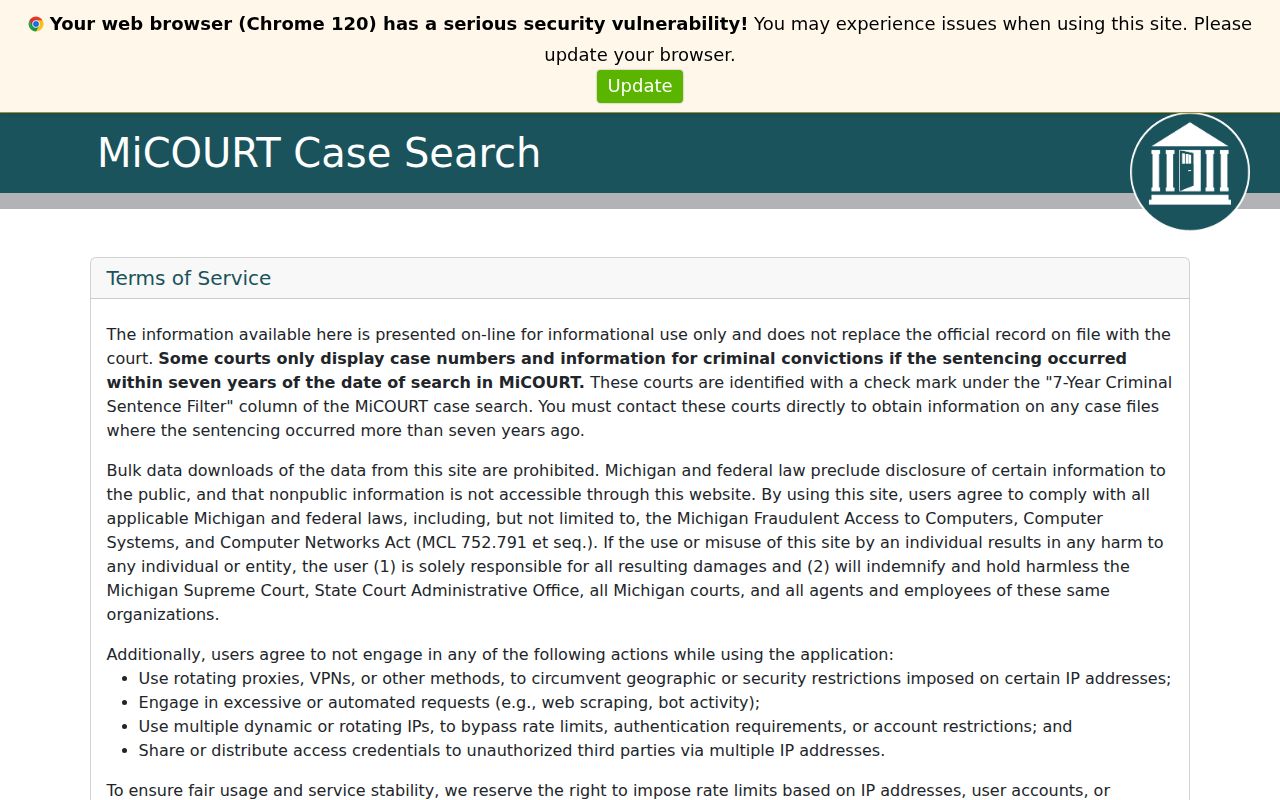
A MiCOURT hit names the responsible court and case number. Take both to the clerk. Ask there for a file, copy, certification, or an older record that is not visible online. Lenawee's 39th Circuit and 2A District courts both sit at 425 N Main in Adrian. Probate Court keeps a separate genealogy research path.
| Court and number | Identify the court, case number, and case caption before requesting material. |
|---|---|
| Party role | Distinguish plaintiff, defendant, petitioner, respondent, witness, attorney, or interested party. |
| Case status | Record the current public status and key docket dates with the access date. |
| Disposition | State the documented outcome when shown; an charge or filing is not a finding. |
| Source level | Mark whether the result is an index entry or a reviewed document. |
MiCOURT’s documented case-search filters are captured in this filter image.
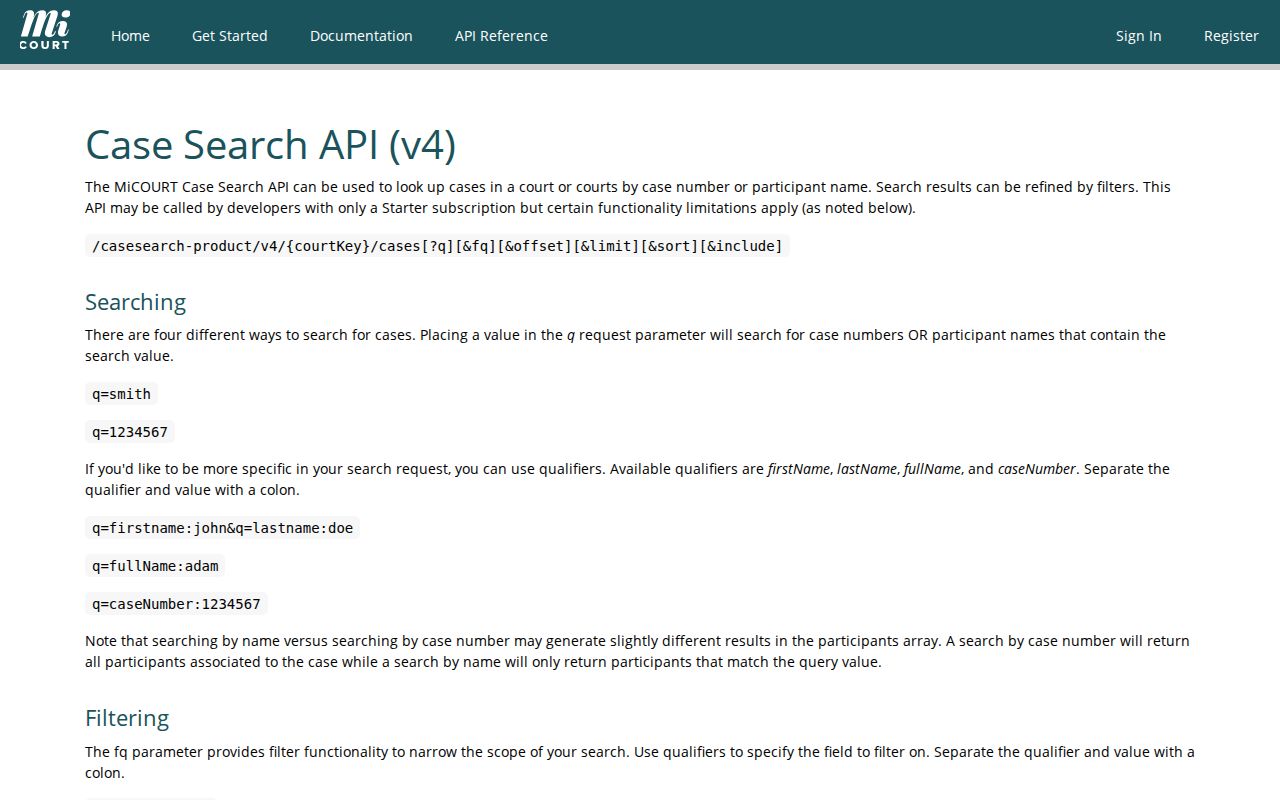
Filters narrow a MiCOURT search quickly. A narrowed result still needs role, date, court, and document-level review before it counts as a match.
Confirming an Adrian Resident Lookup
Anchor the person to one address or event first. Lenawee BS&A accepts owner names in Last, First form through the county property page. Compare the situs and mailing fields there. Then carry the parcel or TaxID into GIS. The county warns that GIS transfers can lag and that its maps are not certified surveys. A compatible parcel and deed result is stronger than a bare name match. It still names a recorded owner, not every resident.
- Search the official property route using the documented name form, then note parcel, situs address, mailing address, and tax year.
- Confirm the parcel and jurisdiction in GIS, preserving the TaxID exactly as displayed.
- Search the deed index for the name as both grantee and grantor, and compare the legal description and recording date.
- Use MiCOURT, a public voter route, or a library record only for the distinct question each source can answer.
- When results conflict, request the underlying document or correction process from the responsible custodian.
- Docket
- A court’s chronological list of filings, events, and actions in a case; it is not automatically the complete file.
- Index and image
- An index points to a record, while an image or document is the underlying material that must be read for context.
- Certified copy
- A custodian-issued copy certified for the purpose stated by that office, distinct from a search result or informal printout.
Adrian Vital and Probate Matches
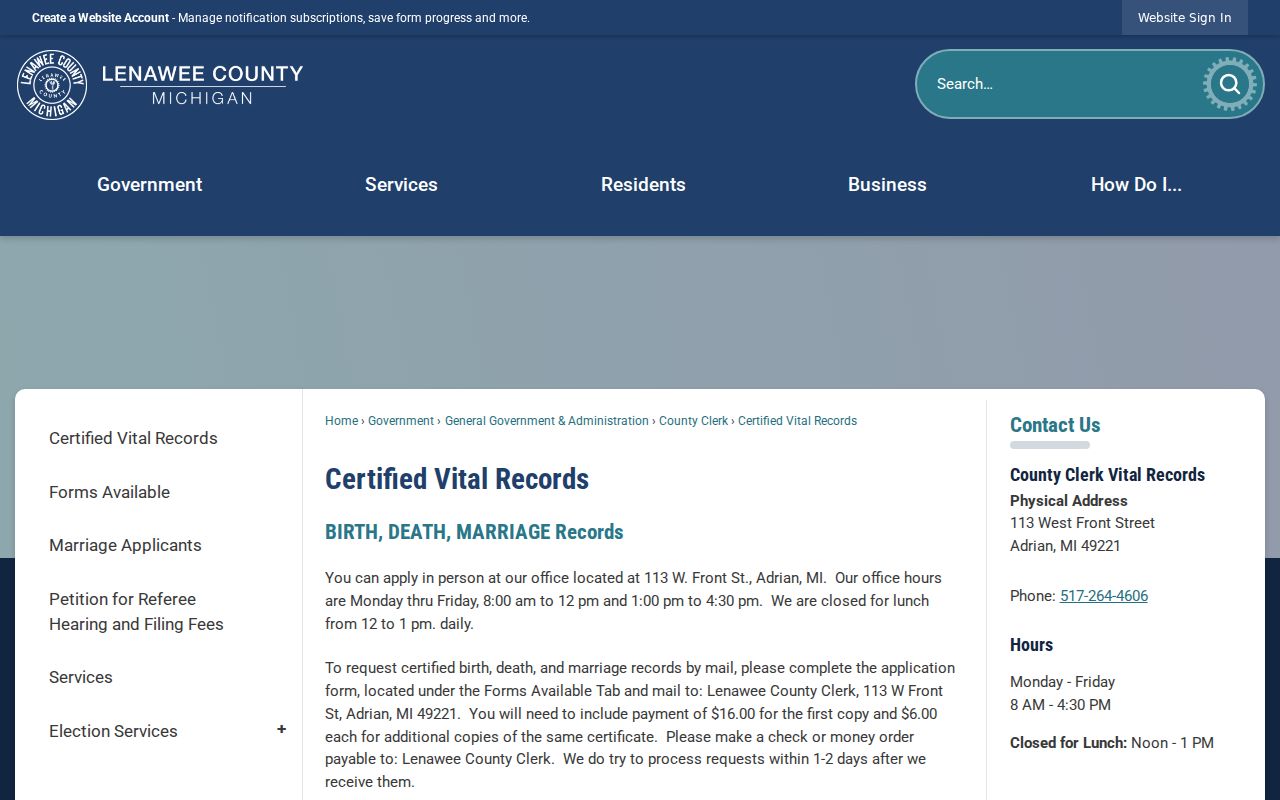
The Lenawee County Clerk's Vital Records & Elections Office at 113 W Front Street issues birth, death, and marriage certificates, marriage licenses, and historical searches. First certificates run $16. Additional copies ordered together cost $6 each. Birth access is restricted for records under 100 years. Older records follow the stated eligibility and genealogy rules. Death, marriage, and divorce records take different request paths, so a directory or newspaper clue is no substitute for a certified or lawful record request.
The Lenawee certified-vital-records page appears in the vital-record image. Fees and eligibility rules are posted there.
Probate records reach back to 1827. For estate and heir questions, the county suggests an in-person surname search with an approximate death year. A probate file can connect an estate, administrator, guardian, heir, or property transfer, but it is not permission to expose protected documents or current contact details. It is a family-history lead.
Adrian Resident Lookup Library Evidence
Historic newspapers often settle what official indexes leave open. The Adrian District Library's Heritage Room holds local indexes, directories, newspapers, and census microfilm. The room also runs a focused email research service. The Daily Telegram Collection spans 1893 to the present. Archive descriptions reach back to 1849. Send a specific name, event, location, and precise date in your request. The library does not take on extensive family-tree or adoption projects.
Read each historic directory entry next to the Adrian city directory collections, the newspaper image, and the census year. A public notice can point to a lead. It is not proof of a current address. Before comparing anything to a property, vital, or probate source, record the article date, title, page or image citation, and the type of item. Citations keep the trail honest.
Note: A dated Adrian listing can anchor a moment in time, but current identity calls for a separately dated official record and careful source matching.
Adrian License Record Checks
A public credential or business filing works well as a secondary check when the name, date range, and other anchors line up. Michigan's Bureau of Professional Licensing search verifies a licensee, issue or expiration dates, and disciplinary status for free. Certified verification through MiPLUS costs $15 per license. Fields vary by board or list. An address in a state filing never proves someone lives there.
The state license-verification page displays Michigan's official licensee lookup and certification options.
Business-history questions reward side-by-side comparison. Match a Lenawee DBA filing against the Michigan entity record, a building or permit item, a deed or assessment result, a directory listing, and a newspaper advertisement, keeping each source's role distinct. The registered office, the officer, the applicant, the owner, and the listed person can all be different people or entities. Assume nothing from a single line.
Adrian Resident Lookup Request Paths
When an online index cannot answer the question, go to the access path for that record type. The Register of Deeds keeps a research vault. It stays open until 4:15 PM. Its online index stops at a cutoff year. Ask the office which years are covered. Court material may need a clerk search, a public terminal, or a file request. County guidance lists a written court search at $10 per name plus copies. For historical series, the Heritage Room, museum archive, and county probate counter welcome in-person visits.
Michigan Freedom of Information Act guidance covers written requests to ordinary public bodies under MCL 15.231 et seq. Identify the existing records, the agency, the date range, the location, the desired format, and preferred delivery. The usual response period is five business days. A written ten-business-day extension is possible. Court clerks acting in their court-clerk role follow court access procedures instead of ordinary FOIA handling.
Adrian Resident Lookup Privacy
Michigan shields key categories. Even public surrounding records do not unlock them. Birth records under 100 years, adoption files, juvenile material, victim information, sensitive law-enforcement material, protected voter fields, and Address Confidentiality Program records all demand special handling. The Michigan Address Confidentiality Program gives an eligible survivor a designated substitute address and mail forwarding. That shield deserves respect. Never use another public source to defeat it.
Lawful use. Use records only for personal, lawful research and do not use any result to stalk, harass, intimidate, or contact a protected person. Michigan law addresses repeated unconsented contact and appearing at a residence as stalking conduct.
Start with the office that created or maintains the record. The Clerk answers vital and election questions. The Register of Deeds handles index or image issues, while Equalization or the local assessor takes assessment questions, and a court clerk handles the case-file correction route. Keep the original record and correction correspondence together.
Adrian Resident Lookup Checkpoints
Test the name, role, date, geography, and source level before calling anything a match. A present portal result does not prove a historic address. A historic directory does not prove a current one either. Write down the URL and the access date. Include any displayed update or certification date. Record the exact search spelling, and note what came back empty. The Lenawee deed portal certifies its index through August 24, 2026. Still, each new result should carry its own access date.
Adrian research often moves from a library or museum lead to a county custodian. Then it loops back to an original scan. That is normal. A negative online result can mean many things. It may reflect a spelling variation. Or the hit came from a different jurisdiction. It could also be a protected record, an incomplete index, or an OCR error. Paper and microfilm sources explain some gaps too. Preserve the uncertainty. Choose the next custodian carefully, and state only what the record itself supports.